FOUNDATION
Before competing at championship level, every element requires dedicated preparation. The foundation phase runs from August 2025 through December 2026: physical, technical and technological preparation executed in parallel.
Live Data Acquisition
Rental karts have no onboard telemetry. To fill that gap, the preparation phase uses a RaceBox Mini GPS receiver paired with RaceChrono Pro to create a dedicated data acquisition stack that provides live lap timing, sector splits and racing line recording during every session. The RaceBox Mini’s 25Hz GPS delivers the precision that phone GPS cannot: accurate enough to measure braking points, apex positioning and corner speed differentials.
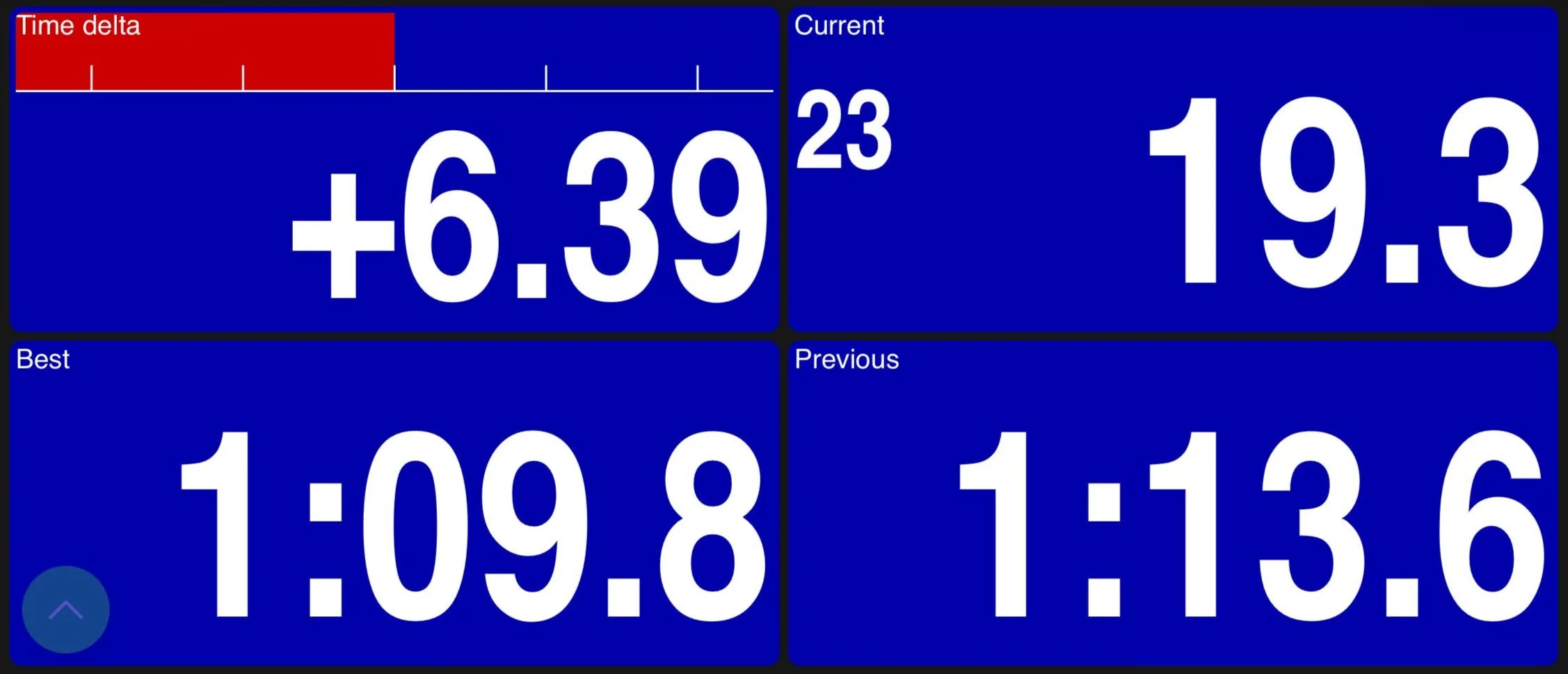
RaceChrono Pro live timing powered by RaceBox Mini 25Hz GPS
BoxBox
BoxBox is a purpose-built analysis platform developed specifically for this campaign. After each session, recorded telemetry is imported and transformed into actionable insights: lap time progression, racing line comparison on satellite imagery, corner-by-corner root-cause classification and automated coaching feedback. Every session becomes a structured dataset, not a memory.
BoxBox also supports GoPro video as a telemetry source, extracting GPS and timing data directly from MP4 files. This makes deep session analysis accessible to any rental kart driver with a GoPro, no specialized hardware required. For the community, it’s an open-source entry point into data-driven karting. For the campaign, it’s the analytical foundation. The discipline built here carries directly into championship racing with the Alfano 7 professional data logger.
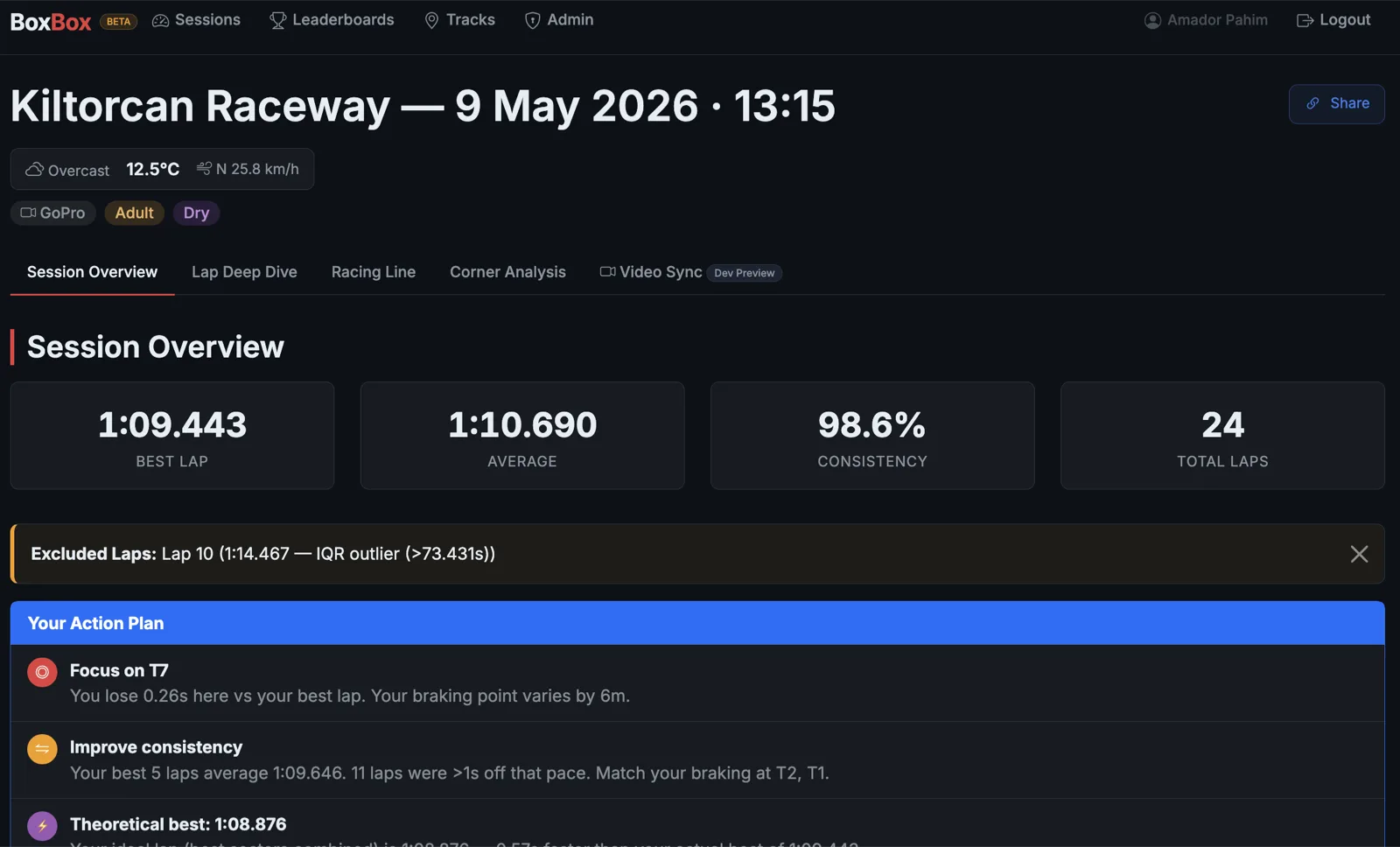
Session overview: lap time chart, delta-to-best, coaching summary, weather data
KEY CAPABILITIES
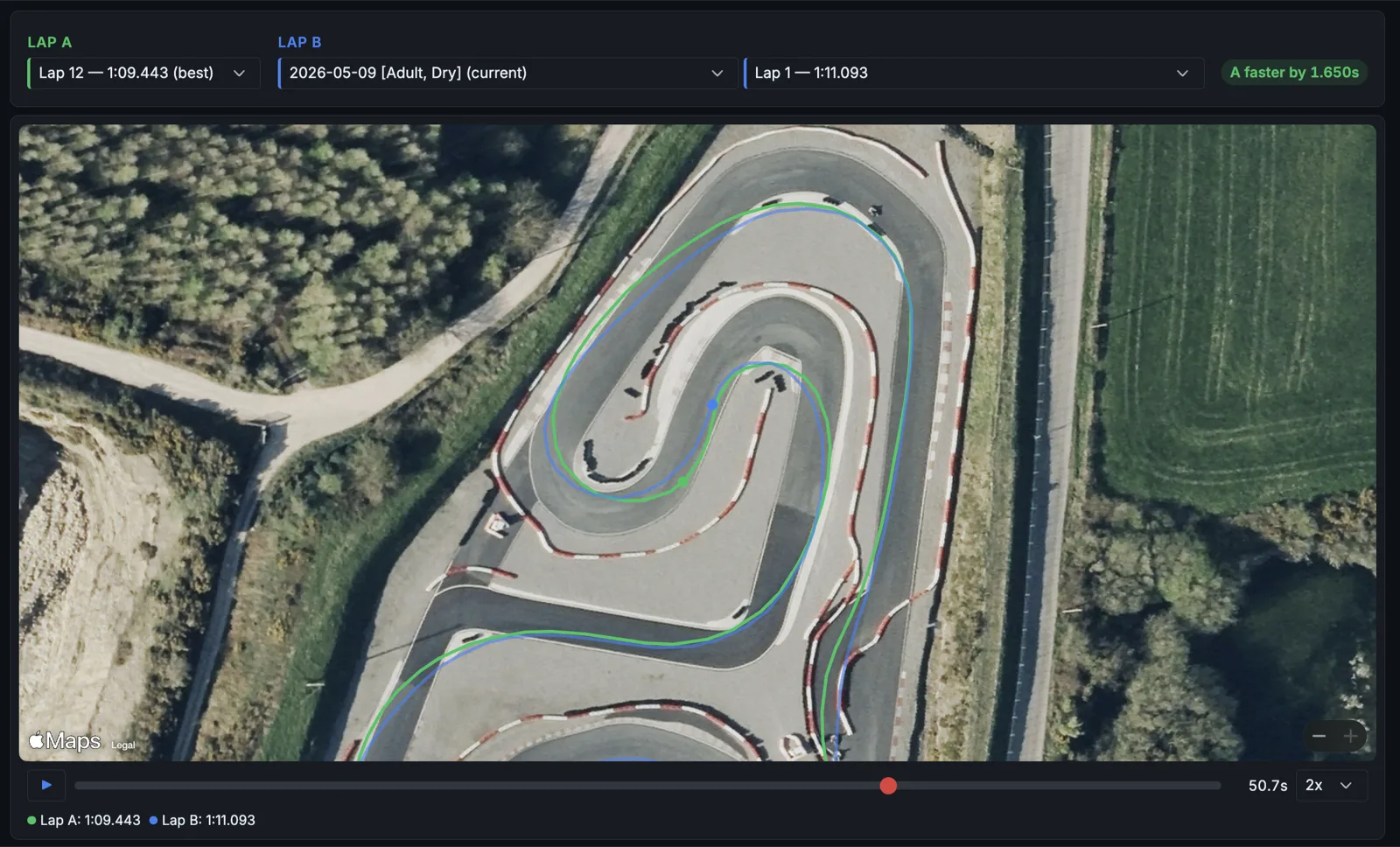
Racing Line Comparison
Overlay any two laps on satellite imagery with speed-coded color traces. Identify exactly where time is gained or lost spatially: a wider entry, a tighter apex, a later throttle application. Includes animated playback and live cumulative delta.
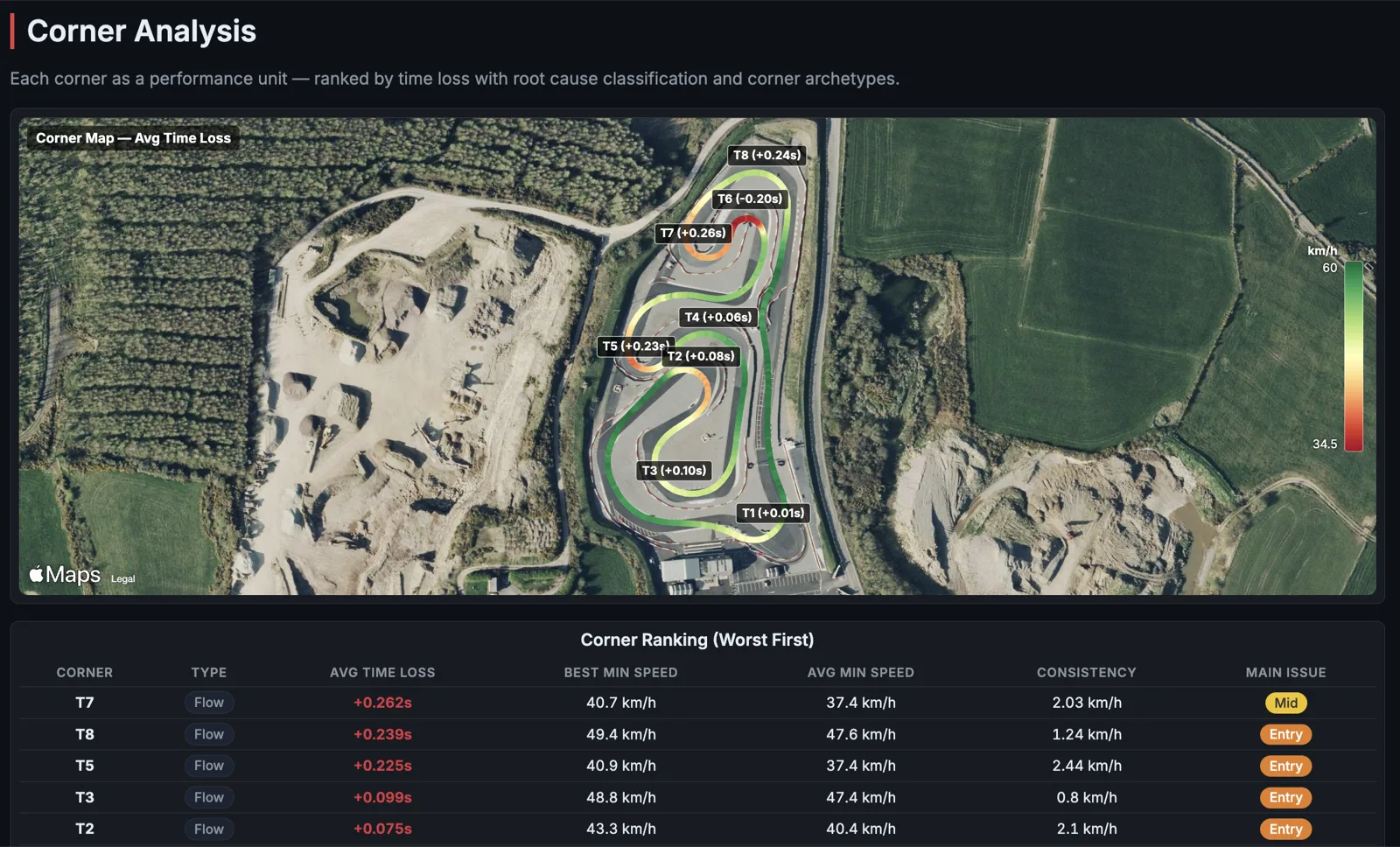
Corner Analysis
Every corner ranked by time loss against the best lap, with root-cause classification: entry-limited (braking too late or too early), apex-limited (carrying too little or too much speed mid-corner), or exit-limited (poor traction or throttle timing). Each classification points to a specific driver correction.
Lap Deep Dive
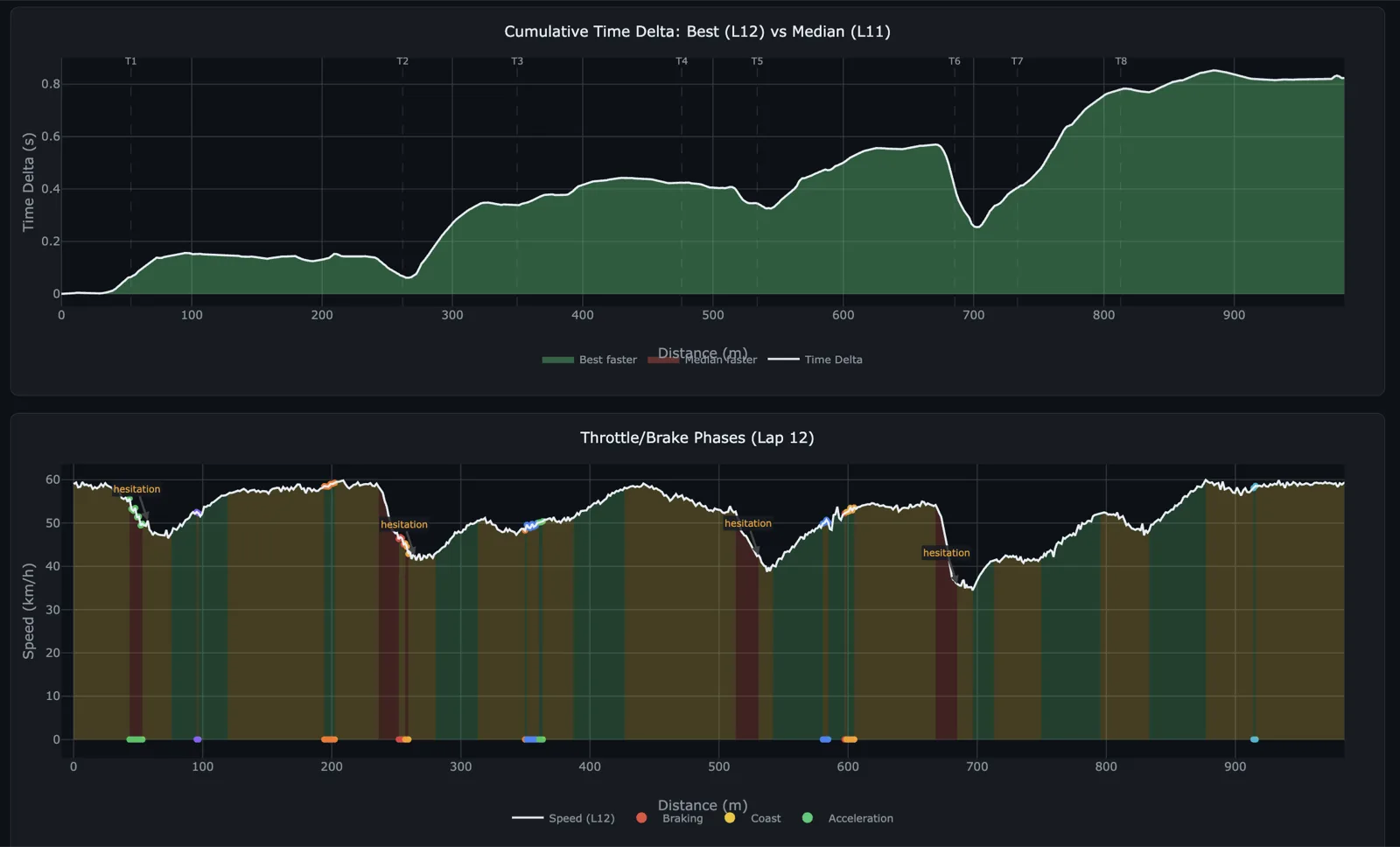
The primary diagnostic view: a cumulative delta trace across the full lap distance, showing precisely where and how time is won or lost against a reference lap. Combined with throttle and brake phase analysis to correlate time deltas with specific driver inputs.
Track Development
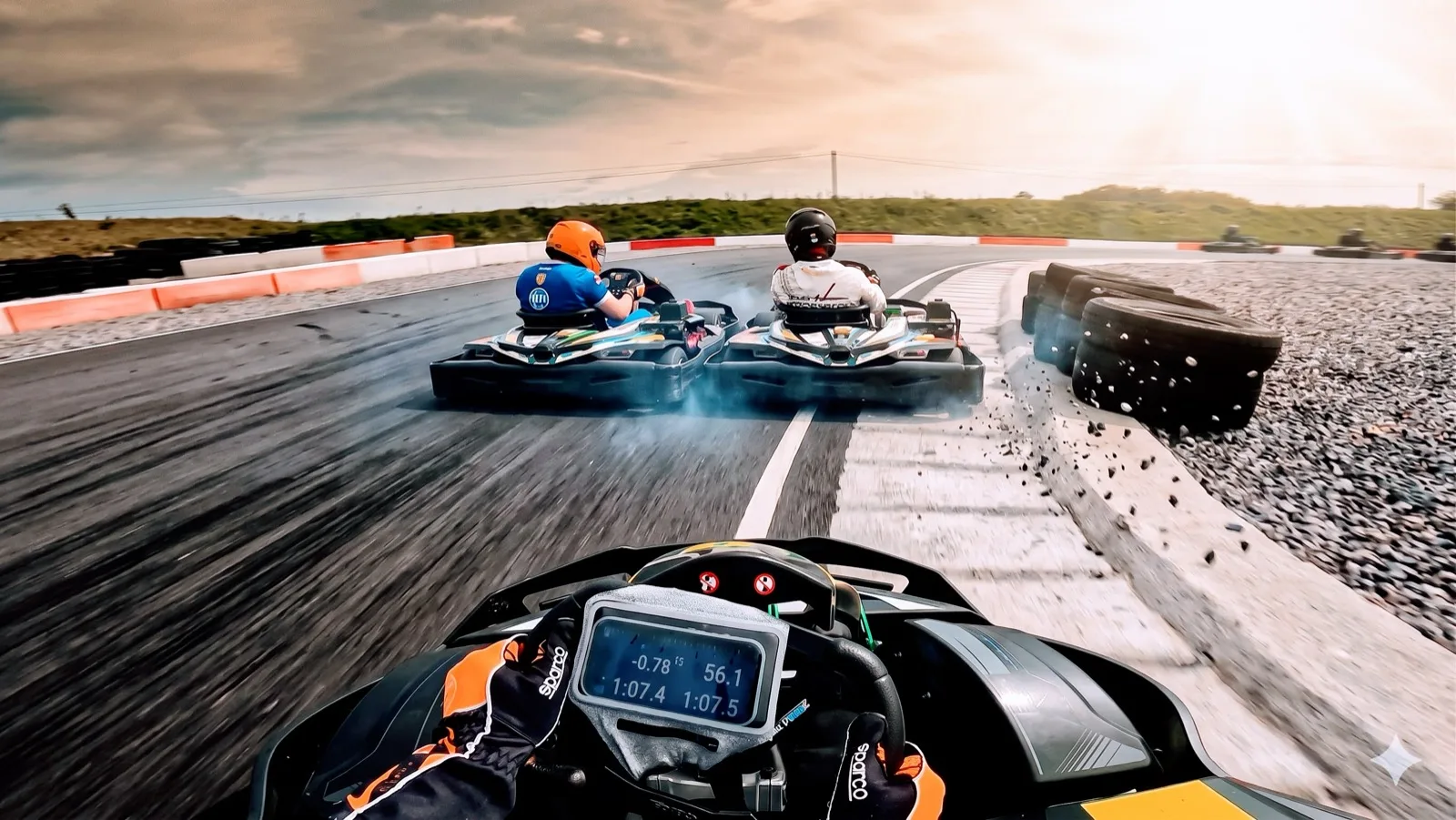
No amount of data or conditioning substitutes for the neural pathways built through repetition on track. Braking references, spatial awareness in traffic, the feel of a kart rotating under load. These are learned through laps, not theory. Seat time is the irreplaceable variable.
Throughout 2026, rental karting sessions across multiple circuits in Ireland and abroad serve as the training ground. Each layout develops different skills: fast, flowing circuits demand commitment and peripheral vision at speed, tight technical tracks reward braking precision and patience, and elevation changes expose kart balance and throttle sensitivity. The variety is deliberate: a driver who can adapt quickly to an unfamiliar circuit carries that adaptability into championship weekends.
KartSim Training
Physical seat time is complemented by thousands of hours in KartSim, racing the Tillotson T4 kart across circuits throughout Europe and the UK. Sim training builds track knowledge before arrival. Braking points, racing lines and corner sequences are internalized before the first real session on an unfamiliar circuit.
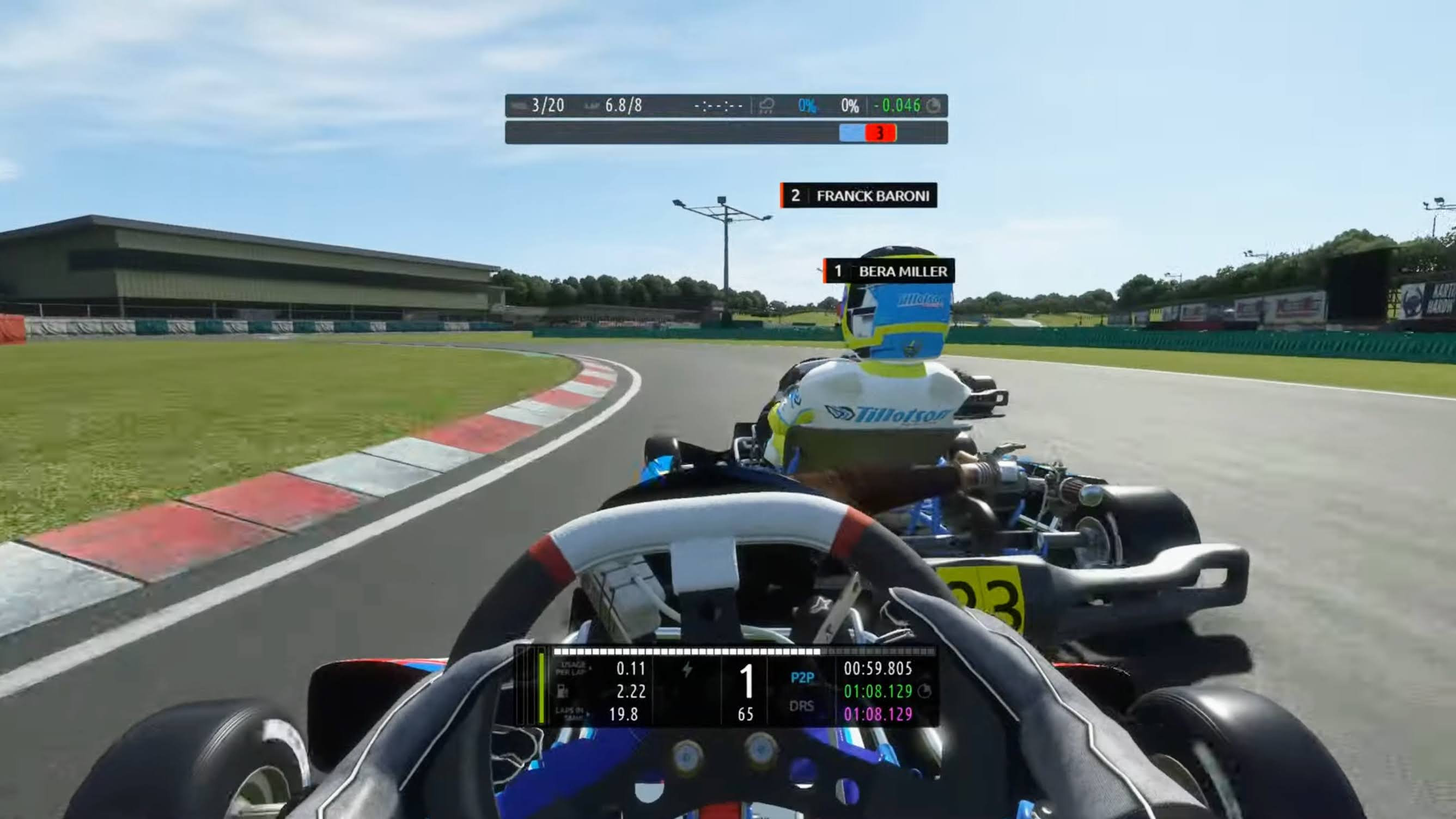
KartSim: Tillotson T4 kart on a laser-scanned circuit
Driver Preparation
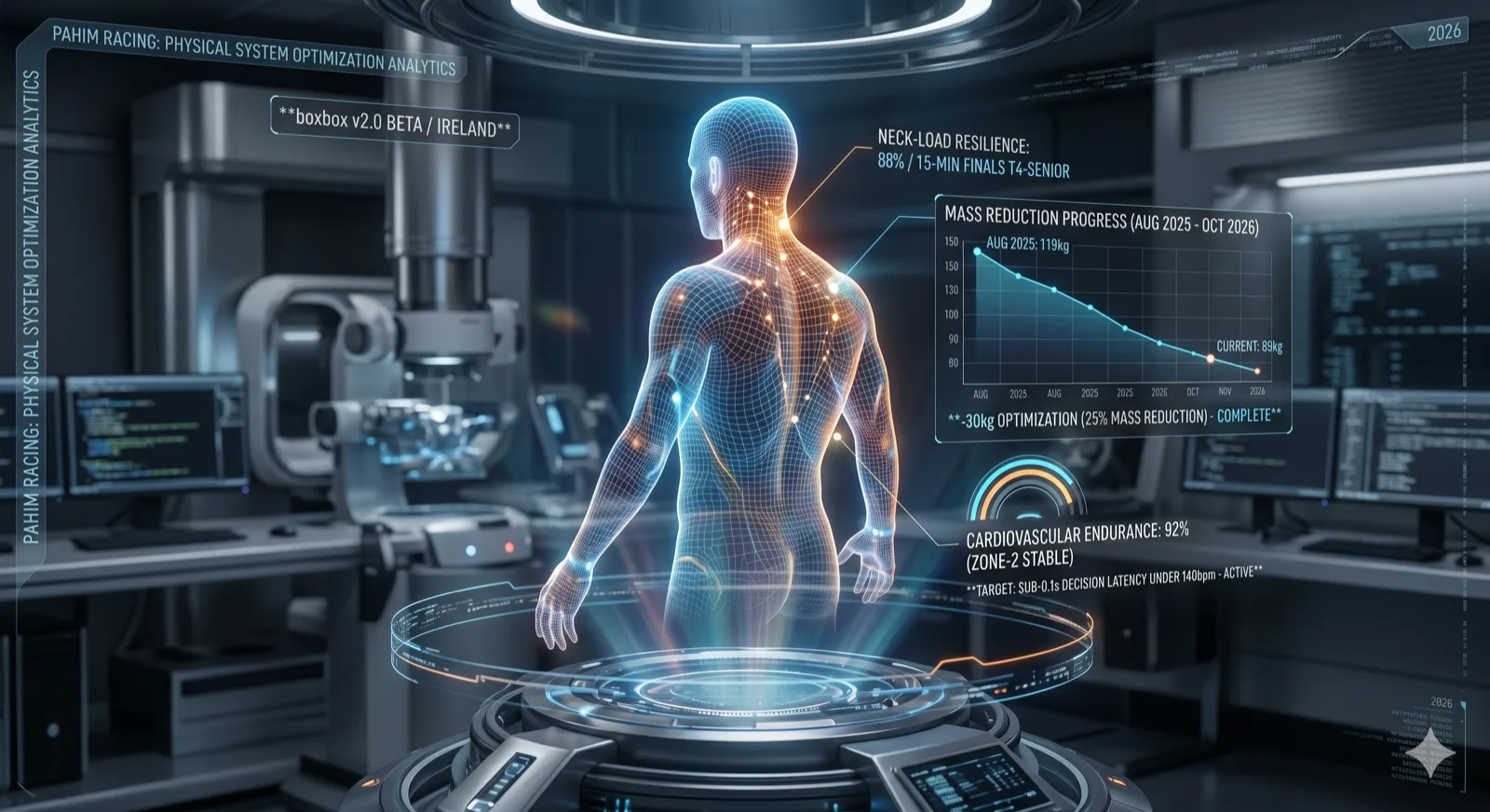
A competitive kart driver is a system: physical, cognitive and physiological subsystems that must perform together under sustained stress. There is no power steering, no power brakes, no traction control. Every input is a direct physical output from the driver. Preparing that system requires motorsport-specific conditioning: cardiovascular endurance to maintain decision-making quality through 15-minute finals under heat soak, neck and core strength to absorb accumulated G-forces without a headrest and deliver precise inputs lap after lap.
Physical capacity is only half the system. Reaction time under fatigue separates competitive drivers from fast ones. Race starts, late-braking overtakes and split-second gap decisions happen deep into physically demanding sessions. Mental conditioning ties it together: managing focus across a full race day, controlling adrenaline on the grid, resetting composure after an incident and maintaining discipline when the instinct is to overdrive.
Next Phase
The foundation phase builds the preparation for championship competition. In 2027, it all comes together.